
North Port Address History Sources
No single roll names every person tied to a North Port home. The Property Appraiser supplies the present parcel key and recent sales bridge. The Clerk carries title backward. City permits can date a structure or major work, while directories and newspapers may identify occupants who never appeared as owners. Each source answers a different question, so keep the source, date, named role, and limits beside every finding.
| Source | Local Time Span | Custodian | Address Evidence |
|---|---|---|---|
| Parcel roll and sales | Current roll; sale depth varies | Sarasota County Property Appraiser | Owner, mail and situs, parcel, legal description, instrument |
| Official Records web | 1990 to present | Sarasota County Clerk | Deeds, liens, dates, parties, and images |
| Official Records archive | 1921 to present | Clerk microfilm, system, or request | Older deeds and plats |
| North Port permits | Coverage not officially stated | City building records | Site, applicant, contractor, work, and dates |
| Directories and phone books | Exact runs not posted | Libraries and History Center | Listed occupant and publication-year address |
| Federal census | Public through 1950 | NARA and library databases | Pre-incorporation households |
For a recent home, start with the parcel roll and deed image. For an older trail, ask about phone and reverse directories under both city names. The open census is useful only for people and places before the municipality.
Begin North Port Previous Residents Research
Enter the full address in the Sarasota County Property Appraiser Property Search. Capture the parcel ID, situs address, owner, mailing address, legal description, subdivision, lot and block, sales, and instrument number. Situs means the physical taxable site. A mailing address is where the owner receives notices. A match between the two, especially with a homestead flag, supports owner occupancy but never proves who else lived there.
The sale instrument is the clean bridge from parcel card to deed image. It avoids a broad common-name search and helps distinguish two parcels held by one person or company. Keep the legal description. North Port has many lots that were platted and traded before a house existed, so a prior landowner should not be called a previous resident without separate proof.
Note: A parcel card is a dated ownership snapshot, not a complete list of the people who occupied the home.
Walk Sarasota Deeds Backward
The Sarasota Clerk Official Records Search provides anonymous index access from 1990 forward. Search the parcel card's instrument number first. In a deed, the grantee is the buyer and the grantor is the seller. Confirm that the legal description matches the North Port parcel.
- Open the newest sale instrument and record both parties, date, instrument, and legal description.
- Search the seller as a grantee in an earlier range; narrow common names with document type.
- Open the prior purchase and match the same lot, block, subdivision, or legal text.
- Repeat until the online index reaches its 1990 start.
- Continue with microfilm, counter help, or a Record Search Request.
- Grantor and grantee
- The grantor transfers an interest; the grantee receives it.
- Chain of title
- The linked sequence of recorded transfers for one parcel.
- Legal description
- Recorded land language that survives a change in street labels.
The portal caps results at 500. Shorten the date range and pick DEED when a surname returns too much. An index match is a lead, not a title opinion.
North Port Records Before 1990
Sarasota County's permanent Official Records begin in 1921, the year the county was created from Manatee County. The general web index begins in 1990. That gap does not mean a deed is missing. Pre-1990 work continues on Clerk microfilm, through Public Access, or with the Clerk's request form by mail, phone, or fax.
The form accepts Official Record, probate, civil, criminal, and marriage searches. Give the name, years, instrument or case number, book and page when known, and plain or certified choice. A plain copy costs $1 per page. Certification adds $2 per document. Complete requests take about three business days. Mail goes to P.O. Box 3079, Sarasota, FL 34230-3079; phone is 941-861-7400 and fax is 941-861-7738.
Note: Earlier land history may route to Manatee County or older state and federal series because Sarasota County did not exist before 1921.
Search Both North Port Names
North Port incorporated as North Port Charlotte in 1959 and adopted North Port in 1974. Search both names in catalogs, newspapers, directories, maps, and archive descriptions. Also test Sarasota County, Warm Mineral Springs, subdivision names, and General Development Corporation material. An old catalog record will use the place name current when an item was issued.
The legal description and parcel ID preserve continuity through those shifts. Postal names can mislead too: a site in North Port jurisdiction may carry a Venice-style 34293 identity. Confirm municipality on the parcel record instead of rejecting a result because its mail line differs.
North Port Past Household Clues
Deeds identify land-transfer parties, not all previous residents. Phone books and criss-cross directories can add occupants. A criss-cross directory sorts by street and house number rather than only surname. Sarasota County has not posted a verified North Port year run, so ask for exact titles before claiming a volume exists.
The North Port Library offers county catalog and genealogy help at 13800 Tamiami Trail, 941-861-1110. Search North Port Charlotte, North Port, Port Charlotte, Warm Mineral Springs, telephone directory, and reverse directory. History Center archives include maps, papers, photos, and genealogy material, but some items need advance retrieval. The collection itself belongs on the North Port city directory page; here, a listing serves only as a dated occupant clue.
- Choose a deed or permit date that fixes the address in time.
- Check the closest phone or reverse directory year and copy the entry exactly.
- Compare nearby years to estimate arrival or departure.
- Pair pre-1959 people with the 1950 census under the true place name.
- Test a death or departure through newspapers, probate, and the next deed.
North Port's Census Time Gap
The latest open federal census is 1950 because schedules remain closed for 72 years. North Port did not incorporate until 1959. No public federal schedule can yet show an incorporated-era North Port household. The 1960 census opens in 2032. Until then, deeds, permits, phone books, newspapers, and voter material bridge the early decades.
A 1950 entry may document a family in Sarasota County or a predecessor community, but it should not be called a North Port city household. Preserve the census place name and explain the later tie on its own.
Date a North Port House
The city's building permit channel can show the site, permit number and type, scope, applicant or owner, contractor, issue date, final date, and status when those fields are available. A final inspection can date completed work more strongly than an application. Neither proves move-in.
This matters in North Port. A master-platted lot may have decades of company transfers before construction. Compare building traits with permit events, and label each role exactly. If an old result is absent, send a focused city request with address, parcel ID, permit type, and range.
Close North Port Resident Trails
Obituaries and probate cases can explain why a name leaves an address. Search library newspaper files with full name, spouse, former city, and date. Then use Clerk probate access to confirm case number, representative, filings, and outcome. Corroborate key family ties because an obituary is secondary evidence.
State certificate applications are collected on the Florida vital records forms page.
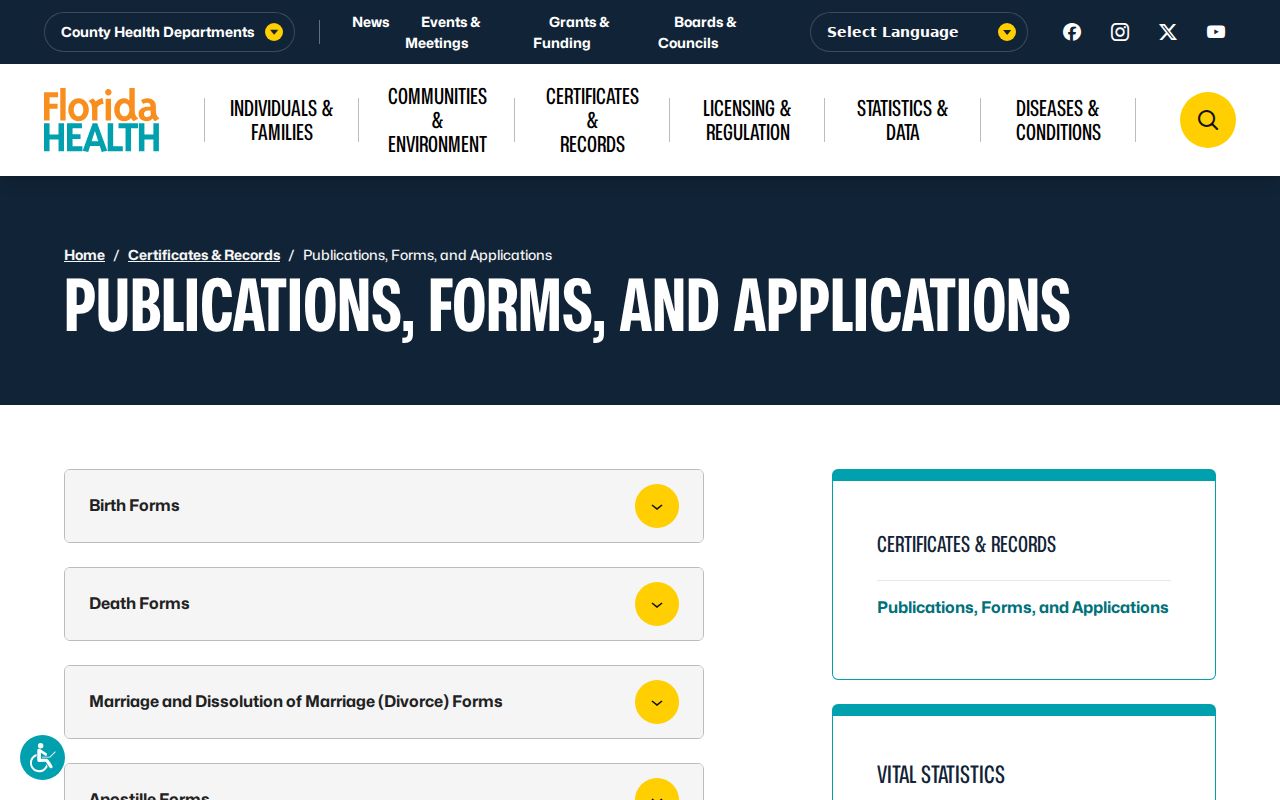
The captured source helps identify the right application, while eligibility still depends on the record type.
A known federal case may add a dated filing address. PACER is the official federal case locator for that limited route.
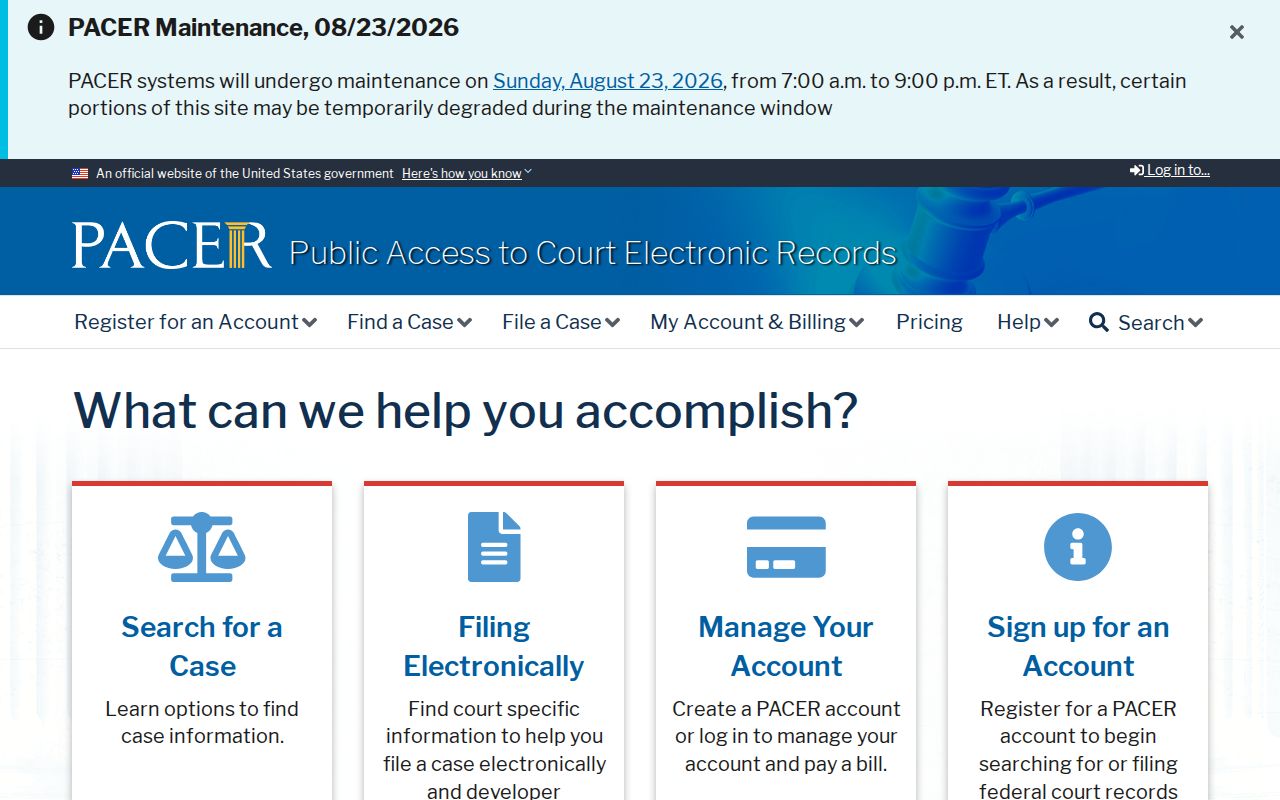
The federal image marks a separate channel and should not be confused with county deeds or local probate files.
Use North Port History Lawfully
A sound chronology separates recorded ownership, claimed owner occupancy, listed residents, and roles in permits or court papers. It keeps uncertainty visible. Screenshots and index rows are research leads; order a certified record from its custodian when proof is required.
Lawful use. Research previous residents for house history, genealogy, heirs, or personal curiosity. Never use an address trail to stalk, harass, threaten, or defeat a protected address.